
Endometriosis Surgery With A History of Blood Clots
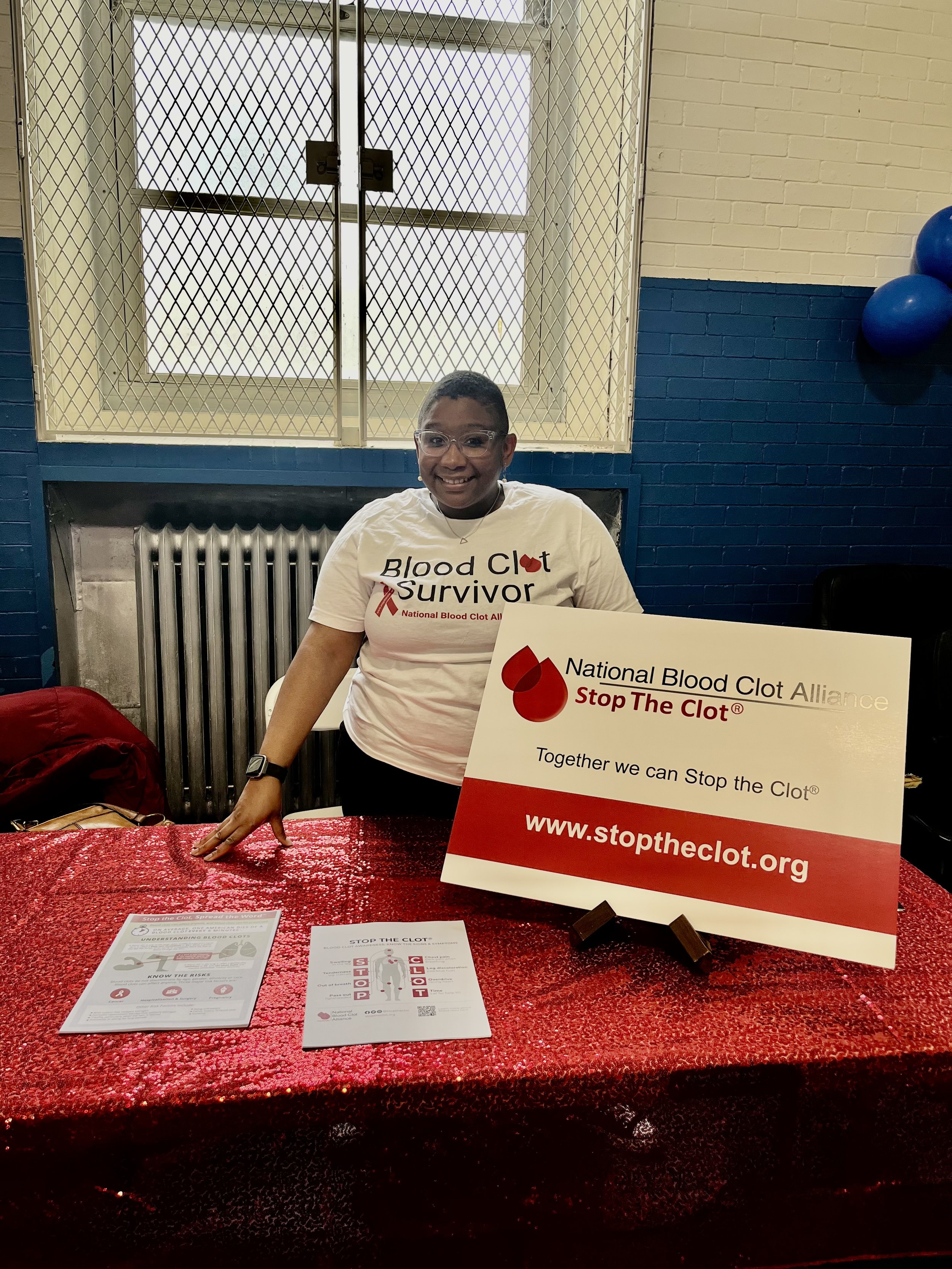
Image of Arielle wearing a “Blood Clot Survivor” t-shirt. Tabling for National Blood Clot Alliance: Stop The Clot.
By Arielle Dance
This article was originally published by Coin Operated Press in Sick of Being Sick Zine Issue 2.
I stood in the ADA accessible restroom, at a rest stop on I-95, giving myself an injection of an anticoagulant as I journeyed to my pre-op appointment nearly two hours away from home. Already that week I’d given myself the injection in the bathroom of my favorite restaurant and in the locker room of my favorite spa. My surgery for endometriosis was scheduled for a week away but because of my history with blood clots I spent weeks preparing my body.
I was diagnosed with endometriosis as a teenager and over nearly twenty years had numerous surgeries to relieve pain and symptoms. But this surgery, my sixth, was going to be different. withdrawal. Amidst my journey with endometriosis, I was diagnosed with Deep Vein Thrombosis (DVT) and pulmonary embolisms (PE), blood clots in the legs and lungs twice in my early twenties. Blood clots are life threatening occurrences so I am grateful to still be alive after two instances of clotting. According to the National Blood Clot Alliance, each year, 900,000 Americans develop DVT and PE. More than 100,000 people will die from them.
Because of my history with blood clots, preparing for and recovering from endometriosis surgery required additional care. Under the supervision of my hematologist and gynecologist, I had a solid plan for pre-op, surgery, and post-op.
Adjust Medication
I take a daily oral anticoagulant. Ahead of surgery, I had to temporarily discontinue my oral anticoagulant a week before surgery, and begin an injectable anticoagulant. For the week leading up to surgery, I injected myself twice a day in the belly.
Prep-Op Testing
I went to the hospital for pre-op bloodwork and a COVID test. It was during this two-hour drive that I had to stop at a rest stop and inject myself with the medication. The public restroom was equipped with a sharps container for syringe disposal.
Final Preparations
The day before surgery, I gave my last injection in the morning. Because endometriosis can also impact bowels, rectum, and surrounding organs, I also had a bowel prep with laxatives the night before. I used my evening to pack an overnight bag and to take a relaxing lavender bubble bath. I knew it would be a while before I could soak in a tub.
Surgery Day
On the morning of surgery I was advised to shower and not to use any lotion. I also could not shave to avoid exposure to bacteria. With my caregiver by my side, I drove to the hospital in the dark of the morning. I pulled into the same rest stop for a bathroom break but instead had to pull over on the exit ramp to vomit.
Once I was settled at the hospital, I prayed and meditated. Earlier in the week, I’d pre-recorded a meditation to listen to that was similar to the guided imagery I worked on for my dissertation. I focused on deep breaths and healing thoughts. As soon as I opened my eyes, my surgeon entered the room to move me to the operating room.
When I woke, everything came in bits and pieces. My mother stroking my hand, being wheeled somewhere, struggling to walk. As I became more alert, I realized I had a catheter in and my belly was so heavy but the skin was numb. I remember someone saying my mom couldn’t stay with me overnight and I wept out of fear and exhaustion.
I remember a night full of vitals checks, restarting my injections, taking other medications, getting support from nurses to adjust pillows, and an intermittent pneumatic compression device to help prevent clots in my legs.
Recovery
With the support of my caregivers, I was able to find comfortable positions to rest around. I needed support with everything from making meals to brushing my teeth. I was unable to bathe or use the bathroom without support. But the most terrifying thing to do was restart self-injection of my anticoagulant. My belly was bruised from surgery and prior injections so I started injecting the medication into my thighs instead. My body was covered in bruises from surgery and injections.
To avoid post-op clotting I took several steps:
Followed hematologist’s orders for injectable and oral anticoagulants
Took laps at home with assistive devices
Wore compression socks
Used a peak flow meter to monitor my lung strength
Monitored my pulse ox
Meditated to promote healing and lower blood pressure
Having surgery can be a traumatic and scary experience for anyone, but for those of us with histories of blood clots, there are additional precautions that must be followed. A year later, I am still pain free and am halfway through Orilissa treatment. Despite the hot flashes, joint pain, and weight gain as side effects of the medication, I am feeling better than I have in almost twenty years. I do not regret my decision to have my uterus removed and am grateful that I recovered without any incidence of blood clots.