5 Ways Adaptive Fashion is Making a Mark
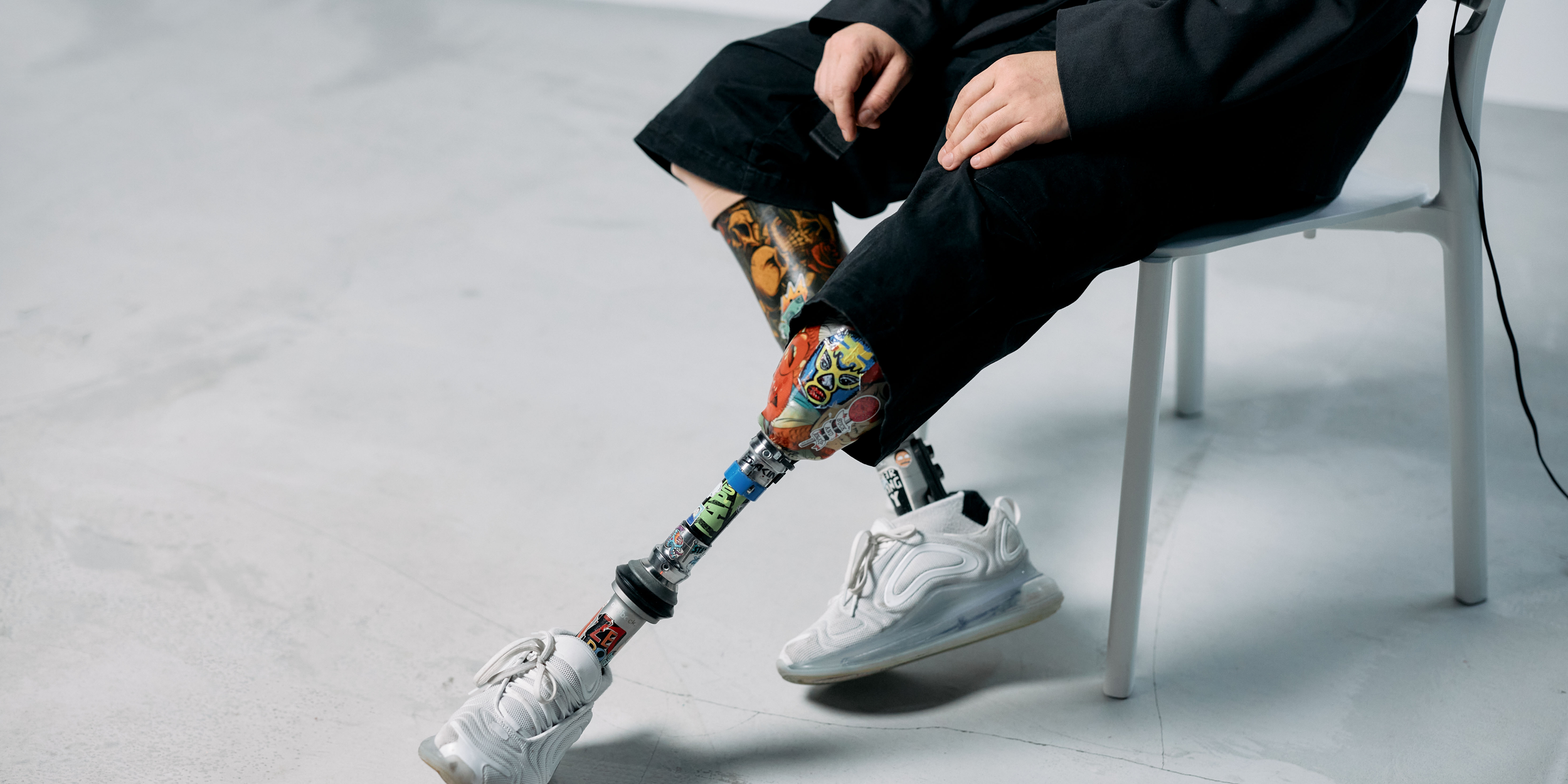
Image of person siting in a chair with two prosthetic legs personalized with artwork.
By Arielle Dance
Fashion is a significant aspect of personal expression — from the pieces we wear to the ways we adorn ourselves. For people with disabilities, the significance is even greater. Finding clothing that is adaptive can be challenging but with increased awareness of the needs of disabled people, adaptive brands are continuing to gain popularity.
From discovering the best piece to express yourself to accentuating your mobility aids, here are five ways adaptive fashion is making a mark.
Finding: Adaptable clothing and footwear options are more available than ever. The field is flourishing thanks to social media and more designers entering the field. Adaptive footwear ranges from shoes with velcro closure to zipped fronts that allow for ease of dressing. Special footsoles are made to help with traction and support dragging feet. Although many mainstream brands have included adaptive clothing lines in their collections, brands that are exclusively adaptive are especially needed. Some of our favorite brands are:
Liberare is on a mission to enable women to dress independently by designing adaptive undergarments.
Unhidden is a disabled woman-owned company aimed to normalize inclusive design.
Joe & Bella believes that feeling like yourself should be easy regardless of age or ability and getting dressed should never feel like a struggle.
Cadense is footwear designed by engineers to support people with foot dragging.
Billy Footwear incorporates zippers that go along the side of the shoes and around the toe, allowing the upper of each shoe to open and fold over completely.
Wearing: Getting dressed can be challenging for many people with disabilities. From clasping buttons to putting on shoes, putting on clothes is made easier using dressing aids. Some helpful aids include a dressing stick, sock aid, button hook, zipper puller, and an extended shoe horn.
Pampering & Grooming: For disabled people, simple grooming tasks or additional pampering can become complex. Tools like rinse-free shampoo caps, inflatable hair washing basins, and suctioned body scrubbers help simplify some of these tasks. Putting on nail polish has become easier with tools like the Poppy, foam gripping tools, suction nail polish holders, and the Clip Different. Applying makeup has become easier with the assistance of adaptive brands like:
Guide Beauty’s mission is Confidence by Design by using universal and inclusive design.
Tilt Beauty is a disabled woman-owned brand that uses ergonomic and high-performance clean formulas for extra-extra-sensitive skin.
Accessorizing: Wearing jewelry is a major part of fashion for some disabled people. However, jewelry often comes with small clasps and tiny probes. To make accessorizing easier, people can use bracelet fastener aids, magnetized clasps, or swap for larger clasps.
Accenting: For those who utilize and rely on assistive devices or mobility aids, the adaptive fashion world has made these pieces fashion statements as well. There are numerous vendors willing to bejewel mobility aids like Glam Canes who designs rhinestone-studded canes for the blind, mobility canes, and walkers. Similar to the expression of showing tattoos, some disabled people who utilize prosthetic limbs like to personalize them with colors, sparkles, or prints. For others with hearing aids or Cochlear implants, jewelry designers have begun to explore accents of these aids.
Deaf Metal was birthed by the founder’s experience of wanting to accentuate her own hearing aids.
Auzi focuses on transforming assistive devices into jewelry that celebrates identity with beauty and pride.
Adaptive fashion ranges from the practical to the expressive, which allows disabled people to share who they are and feel confident in the world. It is important to acknowledge the many areas of fashion that are becoming more inclusive and universal. Although every adaptive brand was not included in this article, we encourage you to research what best suits your individual needs.