New Youth-built AI Tool for Neurodivergent Job Seekers
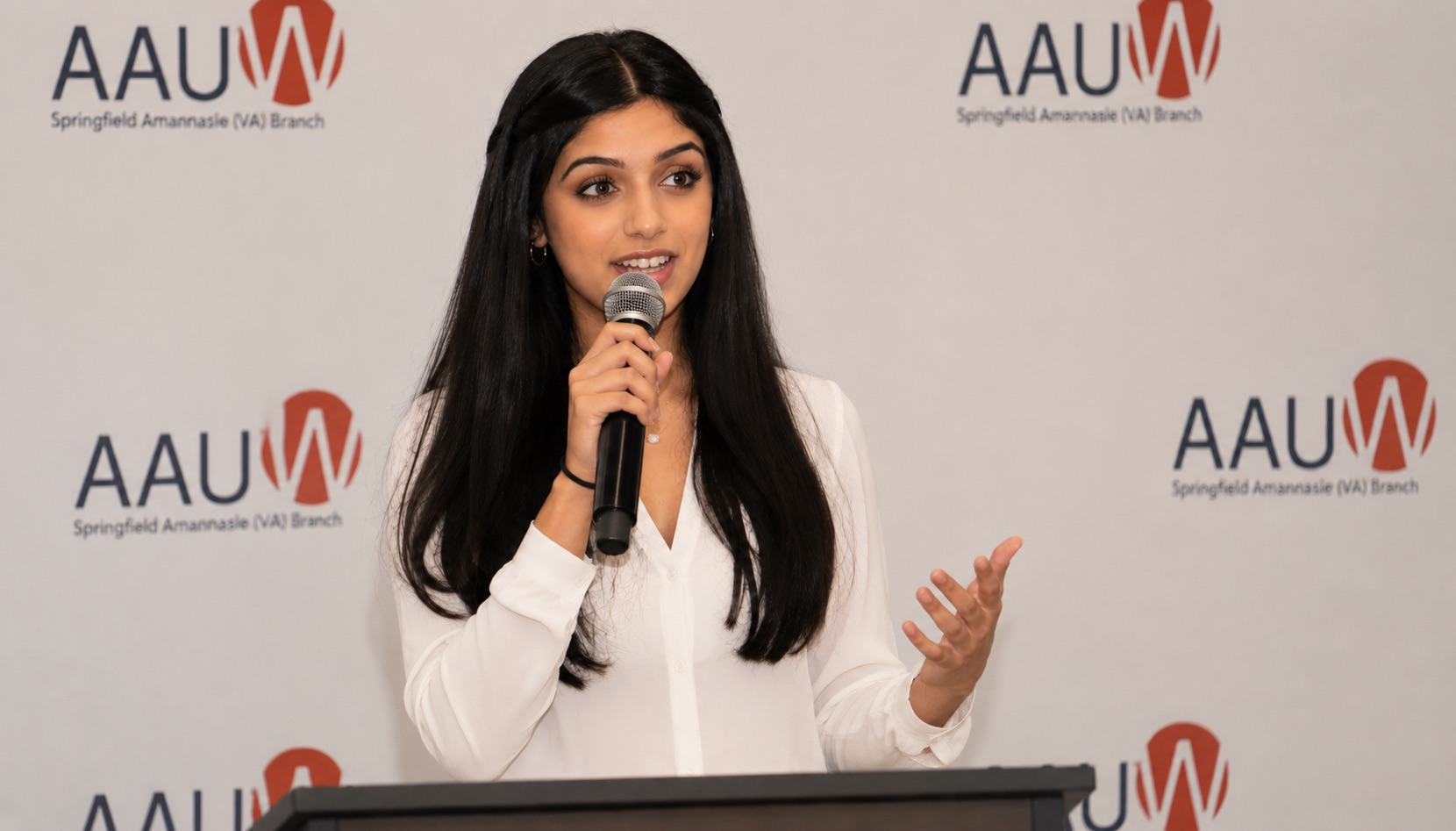
Image of Navya Tuteja, founder of Raah AI, speaking into a microphone that she’s holding. She’s wearing a white shirt and has long dark hair. The background is white with the letters AAUW tiled.
Seventeen-year-old Navya Tuteja is thrilled to launch Raaha – a new AI platform to help job seekers determine compatibility with prospective jobs. Tuteja says, “I’d like people to use it whenever they are making a decision about a job, whether that is before applying, preparing for an interview, or comparing offers.”
According to Tuteja, “unemployment among neurodivergent people in the U.S. is estimated to be as high as 30–40%, significantly higher than for the general population.” Raaha aims to address the need for accessible and adapted support for neurodivergent job seekers. In conversation with the young founder, we learned more about the story behind Raaha and what she hopes will come next.
Diversability: What does the launch of Raaha mean to you?
Navya Tuteja: The name Raaha (راह) means "path" in Hindi and Urdu, and the tagline is "find your way." The name reflects the idea that Raaha doesn't make decisions for people, it gives them the information they need to find the right path for themselves.
For the past few years, I’ve worked with neurodivergent students and families and kept seeing the same problem: finding an opportunity and finding an environment where you can actually succeed are not always the same thing. For me, Raaha was a way to finally take a problem I had spent years hearing about and build something people could actually use before they reached the point of struggling in a workplace.
Diversability: What does it feel like to launch Raaha as a teenager?
Tuteja: I’m 17 years old, so I genuinely didn’t know whether people would use something I built. Seeing Raaha pass 1,000 users in less than two months, get picked up by news outlets, and be shared by people I had never met was surreal. One user who had been struggling with his job search emailed me after using Raaha and later told me he got a senior data analyst position. He earned that job himself, of course, but knowing Raaha had been useful somewhere in that process was really rewarding.
I’m also in my senior year of high school, and I plan to keep growing Raaha, strengthening the platform, and expanding its reach.
Diversability: What inspired the creation of Raaha?
Tuteja: A lot of it goes back to my mom, who is hard of hearing. When I was younger, I didn’t fully understand what that meant. I would get frustrated when I had to repeat something or when she missed part of a conversation. As I got older, I started noticing how much extra effort she was putting in just to participate in spaces that weren’t really built for her.That led me to start Empower InvisAbilities, a nonprofit focused on invisible disabilities and neurodiversity, and later write The Day the Colors Disappeared, a children’s book about disability inclusion.
Employment felt like another place where the same issue showed up. Job descriptions tell you what the employer wants from you, but surprisingly little about what you are walking into. They usually don’t tell you how predictable the schedule is, how often priorities change, how instructions are communicated, or how much task switching a role involves.
We already have so much technology helping employers decide if a candidate fits a job. I wanted to build something that helps the candidate decide if the job fits them.
Diversability: Walk us through how and when you’d like to see Raaha used.
Tuteja: Someone starts with a short work-style quiz so Raaha can understand how they prefer to work. From there, they can paste in a job description from LinkedIn, USAJobs, a company website, or pretty much anywhere else. Raaha analyzes the description alongside their quiz responses across factors like communication, predictability, pace, sensory environment, interruptions, and task switching. They get a personalized breakdown of where the role seems to fit well, where they may want more information, questions they can ask during an interview, and help thinking through accommodations.
Diversability: What makes Raaha unique compared to other AI platforms?
Tuteja: Most hiring technology is built for employers. Raaha is built for the person being evaluated. It also doesn’t require an employer to opt in. Someone can use Raaha with almost any job description, even if the company has no relationship with us or a formal neurodiversity hiring program. It is free for job seekers, too. Raaha is designed broadly for neurodivergent people, including people with ADHD, autism, dyslexia, and other cognitive differences.
Neurodivergent people make up almost 1.5 billion of the population, yet most job platforms were never really designed around how differently people work. But honestly, anyone who wants to understand a workplace better before applying can use it. Most importantly, I don’t want Raaha deciding what somebody can or cannot do. It should help someone notice things they may want to think about or ask about, then leave the decision to them.
Diversability: What’s next for you? What are your plans for Raaha?
Tuteja: Right now, I’m focused on improving Raaha and expanding the partnerships I’ve started with organizations that work with job seekers. I’d like to work more with universities, career centers, disability organizations, and neurodiversity programs so people encounter Raaha while they are actually searching for jobs.
Long term, I’d like checking Raaha before applying to feel as normal as researching a company before an interview. As Raaha grows, I also want to look at patterns across job descriptions: which ones actually give candidates useful information about how a workplace operates, and which leave important things unclear.
The bigger goal is labor-market transparency. People shouldn’t have to accept a job before finding out what the day-to-day environment is actually like. Raaha starts with neurodivergent job seekers because they can face a much higher cost when that information is missing, but ultimately I think everyone should be able to evaluate a workplace before committing to it. And if candidates start expecting that information upfront, employers have a reason to be clearer about what their jobs and workplaces actually demand.
A special thank you to Navya Tuteja for this innovative and inclusive platform. She invites people to try Raaha now at raaha.ai or download Raaha AI on the App Store. You can also follow Raaha on LinkedIn .